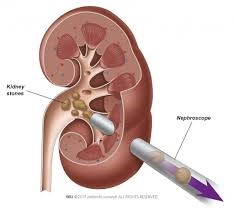
Percutaneous nephrolithotomy (PCNL) is considered a first-choice treatment for renal stones >2 cm. The treatment modality results in the best stone-free rate (SFR) compared with other minimally invasive techniques, such as shock wave lithotripsy and retrograde intrarenal surgery (RIRS). Nonetheless, PCNL is associated with several complications and requires a steep learning curve. The proper understanding of each step of the procedure, available instruments, techniques, and associated complications are essential for providing a high quality of care to the patients.
Standard PCNL (sPCNL) is performed with the use of 24–30 Fr instrumentation. Over the past decade, continuous technological advancement has led to the miniaturization of endoscopic instrumentation. These instruments aim to decrease the intraoperative blood loss, the incidence of intraoperative and postoperative complications, as well as the hospital stay.[2] Despite a wide variety of devices in the market, the understanding of when a specific instrument should be used is limited.
Complication
PCNL is generally a safe treatment option and associated with a low but specific complication rate Many complications develop from the initial puncture with injury of surrounding organs (e.g., colon, spleen, liver, pleura, lung). Other specific complications include postoperative bleeding and fever.